Some mornings call for more than toast. You want something that feels a little special but still fits into a regular routine. This cream cheese cranberry loaf answers that call. It comes together with basic pantry staples and a bag of cranberries, yet the texture and flavor suggest you spent more time than you actually did.
The cream cheese keeps every slice tender, while the cranberries provide little bursts of tartness that wake up your palate. Pecans are optional but add a pleasant crunch if you have them on hand. Whether you serve it with coffee for breakfast or as an afternoon pick-me-up, it delivers without fuss. If you’re ready to get started, jump to the recipe.
Why This Loaf Stays Moist Longer Than Most Quick Breads
Standard quick breads can turn crumbly fast because they lack the extra fat and emulsifiers that slow staling. Cream cheese changes that equation. With its high fat content and creamy consistency, it coats the flour proteins and limits gluten development. At the same time, the small amount of acid in cream cheese helps tenderize the crumb even further.
In practice, this means you can bake on Sunday and still have good slices on Wednesday without toasting or reheating. The cranberries also contribute a bit of moisture as they warm and soften in the oven. Just be sure to use the full amount of butter and cream cheese called for. Cutting back on either will give you a drier result. The high fat content from both butter and cream cheese creates a barrier that holds moisture inside the loaf longer than recipes that rely on milk or oil alone.
The Ingredients That Make It Work
You only need about ten items, most of which you probably already have. Softened unsalted butter and cream cheese form the rich base. A full cup of granulated sugar balances the tart cranberries without making the loaf cloying. Two eggs provide structure and lift. The dry team includes all-purpose flour, baking powder for rise, and salt to sharpen flavors.
Fresh or frozen cranberries both work well here. Frozen ones are often more convenient and actually better because they hold their shape and release less juice into the batter. If you go with fresh, give them a quick rinse and pat dry. Chopped pecans bring optional texture, but the loaf tastes complete without them too. Vanilla extract rounds out the aroma. That’s it. No milk, no sour cream, no complicated add-ins needed for excellent results.
Mixing and Baking: Keeping It Simple and Effective
Get the Pan and Oven Ready First
Start by preheating your oven to 350°F. This gives the batter an immediate boost when it goes in. While the oven heats, prepare a standard 9-by-5-inch loaf pan. Grease it well, then dust with flour or line with parchment paper that overhangs the sides. The parchment makes lifting the finished loaf out clean and simple, which matters when the loaf is still a bit fragile hot from the oven. A properly prepared pan also helps the crust form evenly without sticking.
Cream the Butter and Cream Cheese Thoroughly
In a large bowl, beat the softened butter and cream cheese together until completely smooth. This takes a minute or two with a hand mixer on medium speed. Scrape the bowl once or twice so no lumps hide in the corners. Proper creaming incorporates tiny air bubbles that help the loaf rise and create that soft, cake-like texture you want in a quick bread. If the fats are still cold, they won’t blend smoothly and you’ll end up with a heavier crumb.
Add Sugar, Vanilla, and Eggs
Pour in the sugar gradually while mixing. The mixture should turn noticeably lighter and fluffier after a couple of minutes. This step builds the structure that will support the fruit and keep the crumb tender. Stir in the vanilla, then add the eggs one at a time. Mix well after each one. The batter may look slightly curdled at this point. That is normal and will smooth out once the flour goes in. Rushing this stage or using cold eggs can lead to a grainy texture later.
Combine the Dry Ingredients and Finish the Batter
In a separate bowl, whisk the flour, baking powder, and salt. Add this mixture to the wet ingredients in two or three additions, mixing on low speed or by hand just until you no longer see dry streaks. Overmixing at this stage develops too much gluten and leads to a tough, dense loaf instead of the light one you’re after. Take your time here and stop as soon as the flour disappears.
Now fold in the cranberries and pecans if using. A spatula works best here. Turn the batter gently from the bottom up until the fruit is evenly distributed. If you want to keep the cranberries from sinking to the bottom during baking, toss them with a tablespoon or two of the flour before adding them. This light coating helps them stay suspended in the batter.
Bake Until Done and Cool Properly
Scrape the batter into the prepared pan and smooth the top. Bake for 60 to 70 minutes. Start checking at the 55-minute mark. A toothpick inserted in the center should come out clean or with a few moist crumbs. If the top browns too fast, loosely tent the pan with foil for the remaining time. This prevents a burnt crust while the inside finishes cooking. Every oven has its own personality, so use the toothpick test as your guide rather than the clock alone.
Let the loaf rest in the pan for 10 minutes after it comes out of the oven. This short rest lets the structure set so it doesn’t fall apart when you remove it. Then transfer to a wire rack to cool completely before slicing. Warm slices are tempting, but the texture improves as it cools and the flavors settle. Slicing too soon can give you a gummy center.
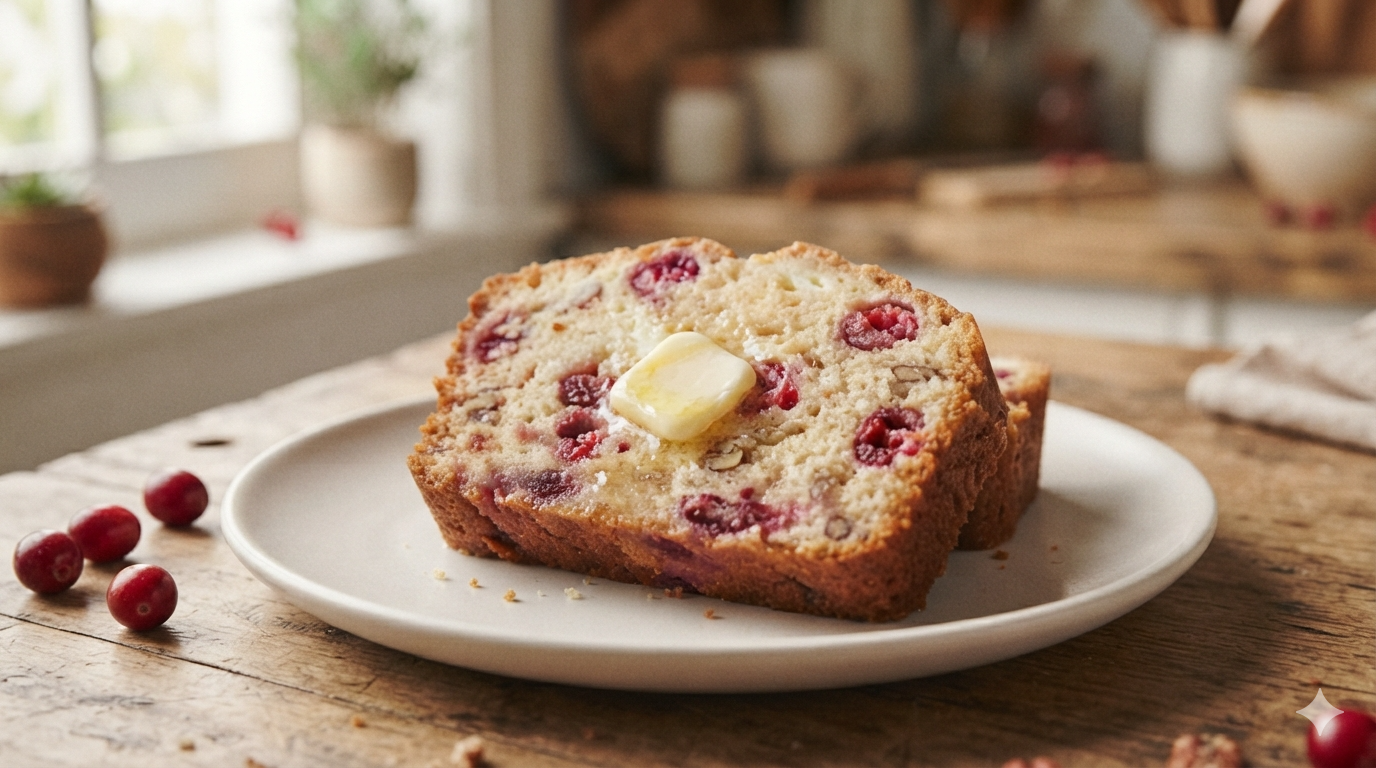
Pro Tips and Troubleshooting
A few small details make a noticeable difference with this recipe.
- Make sure the butter and cream cheese are truly at room temperature. Cold ingredients won’t cream properly and can leave you with a lumpy batter or uneven texture.
- Do not thaw frozen cranberries. Adding them straight from the freezer keeps their color from bleeding into the entire loaf and prevents extra moisture from making the batter too wet.
- Resist the urge to mix the batter vigorously once the flour is added. Gentle folding preserves the air you worked in during creaming.
- If your loaf turns out dense, the most common cause is overmixing or using cold ingredients. Next time focus on those two points and check your oven temperature with a thermometer.
- Every oven runs a little differently. If your loaves consistently need the full 70 minutes or more, your oven may run cool. An inexpensive oven thermometer helps more than you might expect.
- If the top cracks more than you like, that is usually just from a good rise. It does not affect taste or texture.
Variations to Match What You Have on Hand
This loaf welcomes small changes without falling apart.
For a brighter flavor, add the zest of one orange along with the vanilla. The citrus pairs naturally with cranberries and cuts through the richness. A simple glaze made with 1 cup powdered sugar, 2 to 3 tablespoons milk or cream, and ½ teaspoon vanilla or lemon juice turns it into something closer to a coffee cake. Drizzle it over the cooled loaf and let it set before slicing.
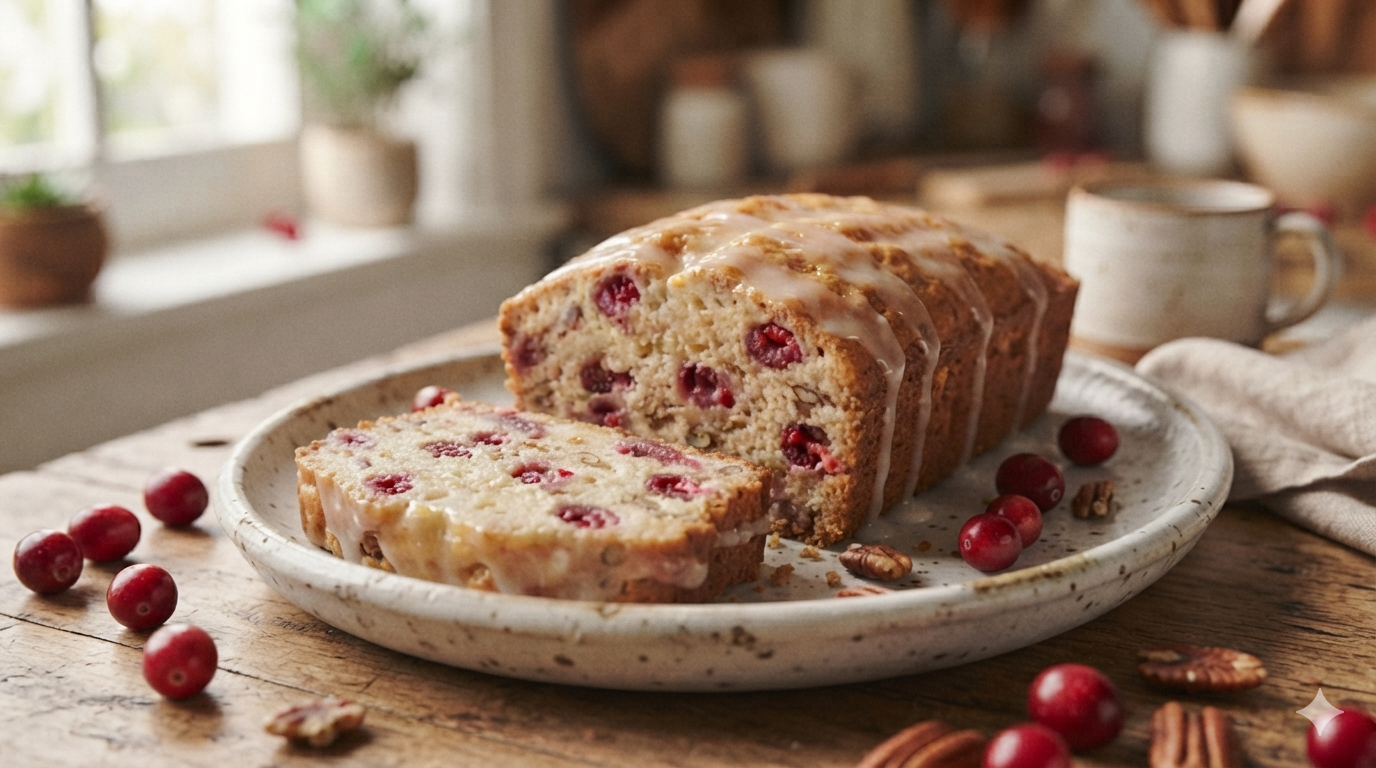
Need it nut-free? Just leave out the pecans. The texture stays pleasant. For a gluten-free version, swap the all-purpose flour for a good quality 1-to-1 gluten-free baking blend that contains xanthan gum. The crumb will be a touch more delicate but still very good. Dairy-free adaptations are trickier because cream cheese is central, but some bakers have success with plant-based cream cheese alternatives and vegan butter sticks. The tang remains, though the rise and moisture level can vary slightly depending on the brand.
Want to turn it into mini loaves for gifting? Divide the batter between three or four mini loaf pans and reduce the bake time to 30 to 40 minutes. They make nice holiday or hostess gifts when wrapped in parchment and tied with twine. You can also add a handful of white chocolate chips for extra sweetness if your crowd prefers that direction.
How to Store This Loaf So It Lasts
Once completely cool, wrap the loaf tightly in plastic wrap or store it in an airtight container at room temperature. It stays good for three to four days this way. The cream cheese and butter content help it resist drying out better than many other quick breads. If your kitchen runs warm or humid, move it to the refrigerator after the second day.
For longer storage, wrap individual slices or the whole loaf in plastic, then in foil, and freeze for up to two months. Thaw slices overnight in the fridge or at room temperature for an hour or two. Toasted frozen slices make a quick breakfast on busy mornings. I like to slice the whole loaf before freezing so I can pull out just what I need.
Refrigeration works if your kitchen runs warm, but it can dry the loaf slightly faster than room temperature storage. If you do refrigerate, bring slices back to room temp or warm them gently before eating. The high fat content protects the texture better than leaner breads, so you still get good results after a week in the fridge.
Baking this cream cheese cranberry loaf has become a regular part of my cooler weather routine. It fills the house with a comforting aroma and gives you something homemade to reach for all week. The method is straightforward enough for a weeknight yet special enough for weekend guests or holiday mornings. I hope you enjoy making it as much as I do. If you try a variation or have questions about the process, leave a comment below. I appreciate hearing how these recipes work out in other kitchens.
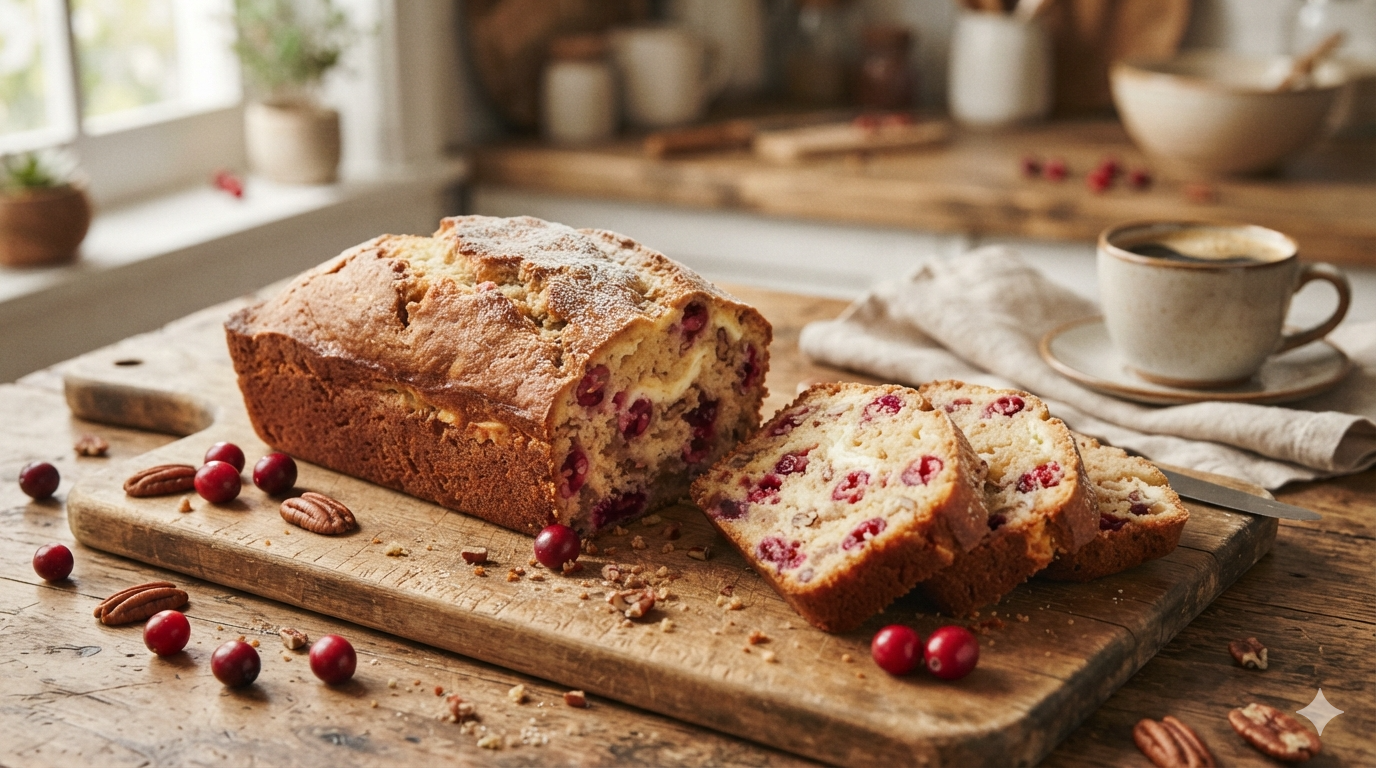
Cream Cheese Cranberry Loaf
Ingredients
Method
- Preheat oven to 350°F (175°C). Grease a 9×5-inch loaf pan and line with parchment paper or lightly flour it.
- In a large mixing bowl, beat softened butter and cream cheese together with a hand or stand mixer until smooth and creamy, about 2 minutes.
- Gradually add the sugar and continue beating until the mixture is light and fluffy. Mix in the vanilla extract.
- Add the eggs one at a time, beating well after each addition until fully incorporated.
- In a separate medium bowl, whisk together the flour, baking powder, and salt.
- Add the dry ingredients to the wet mixture in two or three additions, mixing on low speed just until combined. Do not overmix.
- Gently fold in the cranberries and pecans (if using) with a spatula until evenly distributed. For best results, toss cranberries with 1-2 tablespoons of the flour before folding to prevent sinking.
- Pour batter into prepared pan, smooth the top, and bake for 60-70 minutes until a toothpick inserted in the center comes out clean. If top browns too quickly, cover loosely with foil for the last 15 minutes.
- Cool in the pan for 10 minutes, then transfer to a wire rack to cool completely before slicing.
Notes
If the loaf sinks in the middle, it may be underbaked. Check with toothpick and bake additional time if needed. Store wrapped at room temperature up to 4 days, refrigerate up to 1 week, or freeze up to 2 months wrapped tightly. Tossing cranberries in a little flour before folding helps keep them evenly distributed instead of sinking to the bottom.
Leave a Reply