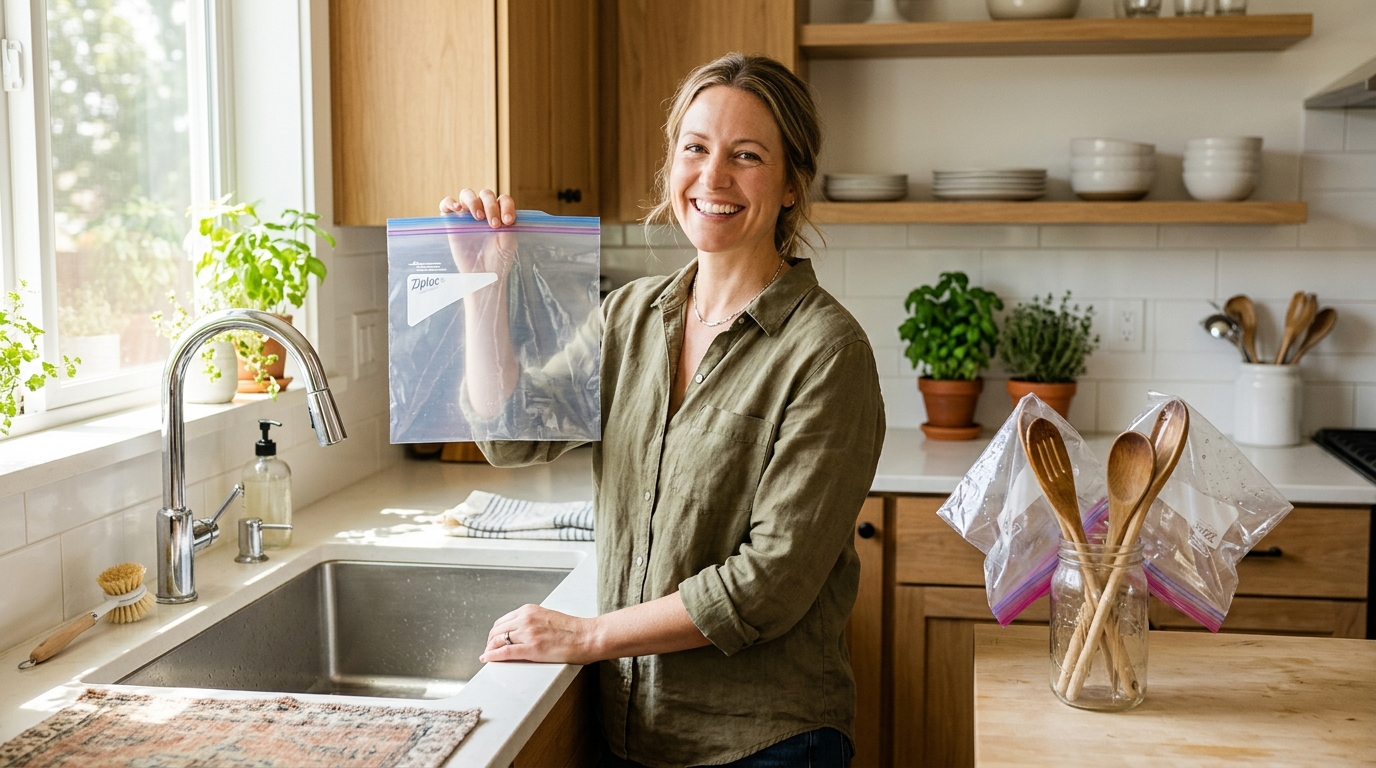
There I was, standing paralyzed over my kitchen trash can with a rinsed sandwich bag pinched between two fingers, doing that little internal gymnastics routine we all do. Toss it and feel horribly wasteful? Or keep it, wash it, and feel vaguely unhygienic? I hovered there way too long. Honestly, that tiny, ridiculous stalemate is exactly why I finally sat down to figure out whether it’s actually safe to reuse Ziploc bags, or whether I’ve just been kidding myself.
Good news up front for all my fellow eco-conscious, budget-savvy friends: the answer is mostly a resounding yes! But there are a few absolute dealbreakers you need to know about. I learned my lesson the hard way once with a bag that held chopped onions and subsequently haunted my pantry for the rest of its natural life. Let me save you from my smelly mistakes.
Can You Actually Reuse Ziploc Bags?
Yes, you absolutely can. Name-brand Ziploc bags (and high-quality generic equivalents) are completely reusable after a good hand-washing with soap and thorough air drying. In fact, the manufacturer actually backs this up! They weren’t designed as a strict one-and-done product, and the thick plastic holds up to a standard wash cycle at the kitchen sink surprisingly well.
The general internet guidance floating around is that you can wash and reuse a bag up to about 10 times before it officially gives out. Honestly? I’d treat that as a loose ballpark, not a hard rule. Some thinner sandwich bags will tap out sooner. Meanwhile, a sturdy, heavy-duty gallon freezer bag can go much longer if you treat it gently.
Think of it like reusing plastic take-out containers. The container earns another round in your fridge as long as it’s clean, odor-free, and structurally intact. The exact same logic applies here. The moment a bag stops sealing tightly or refuses to come clean, its reuse life is over. Until then, it’s totally fair game.
How to Wash and Dry Ziploc Bags the Right Way
This part is incredibly easy. You basically treat them like a very floppy, slightly annoying dish. Here is the foolproof routine I’ve settled on to get them perfectly clean:
The 4-Step Cleaning Routine
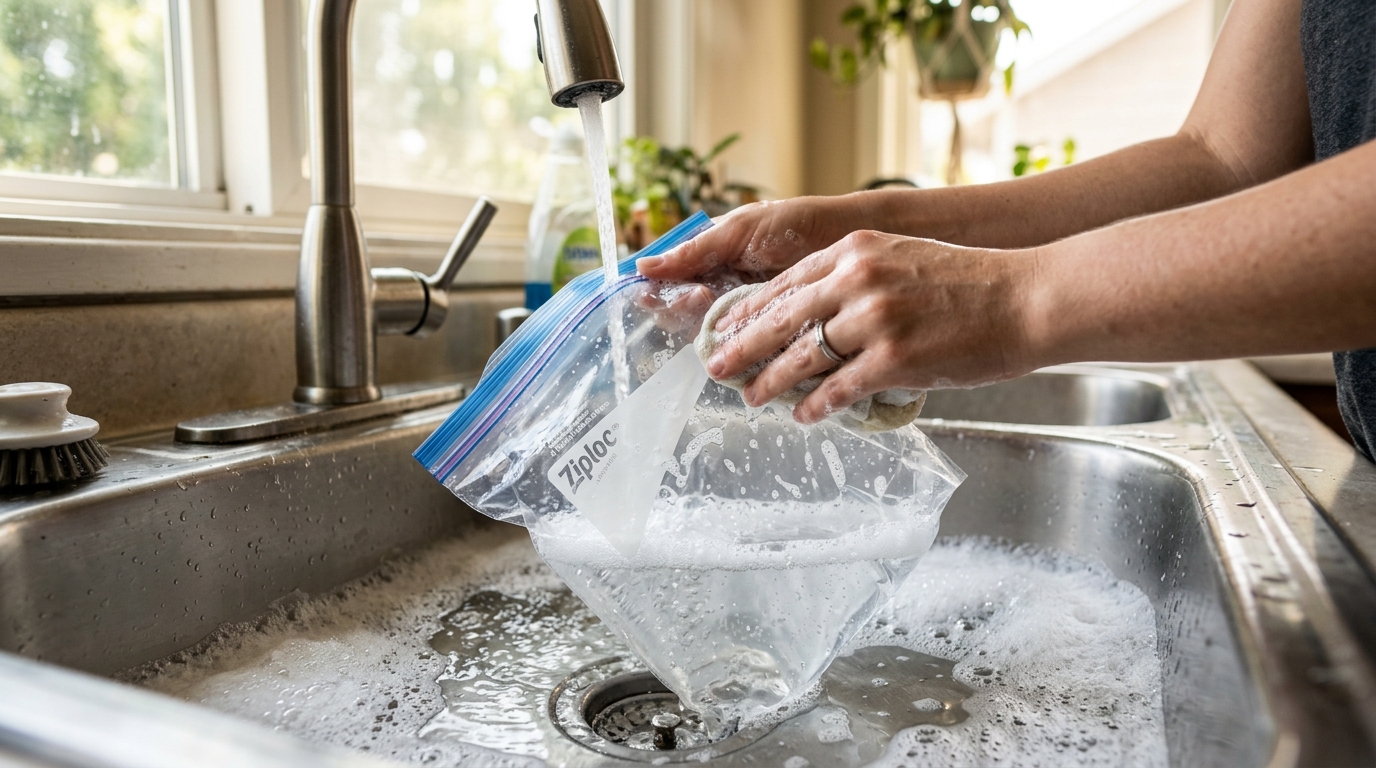
- Step 1: Fill the bag partway with warm water and a small squirt of your favorite grease-cutting dish soap. (Make sure the water is warm, not boiling hot, which can warp the plastic).
- Step 2: Zip it shut securely and slosh it around so the soapy water hits every single corner.
- Step 3: Open it up and gently scrub the inside with your fingers or a soft sponge.
- Step 4: Rinse thoroughly under running water until there’s zero soap film left.
A major tip I learned the hard way: Do not turn the bag inside out to clean it! It feels incredibly efficient, but you risk ripping the side seams. A torn seam means the bag is instantly garbage. Just reach your hand inside and wash it as-is.
The Drying Secret You Can’t Skip
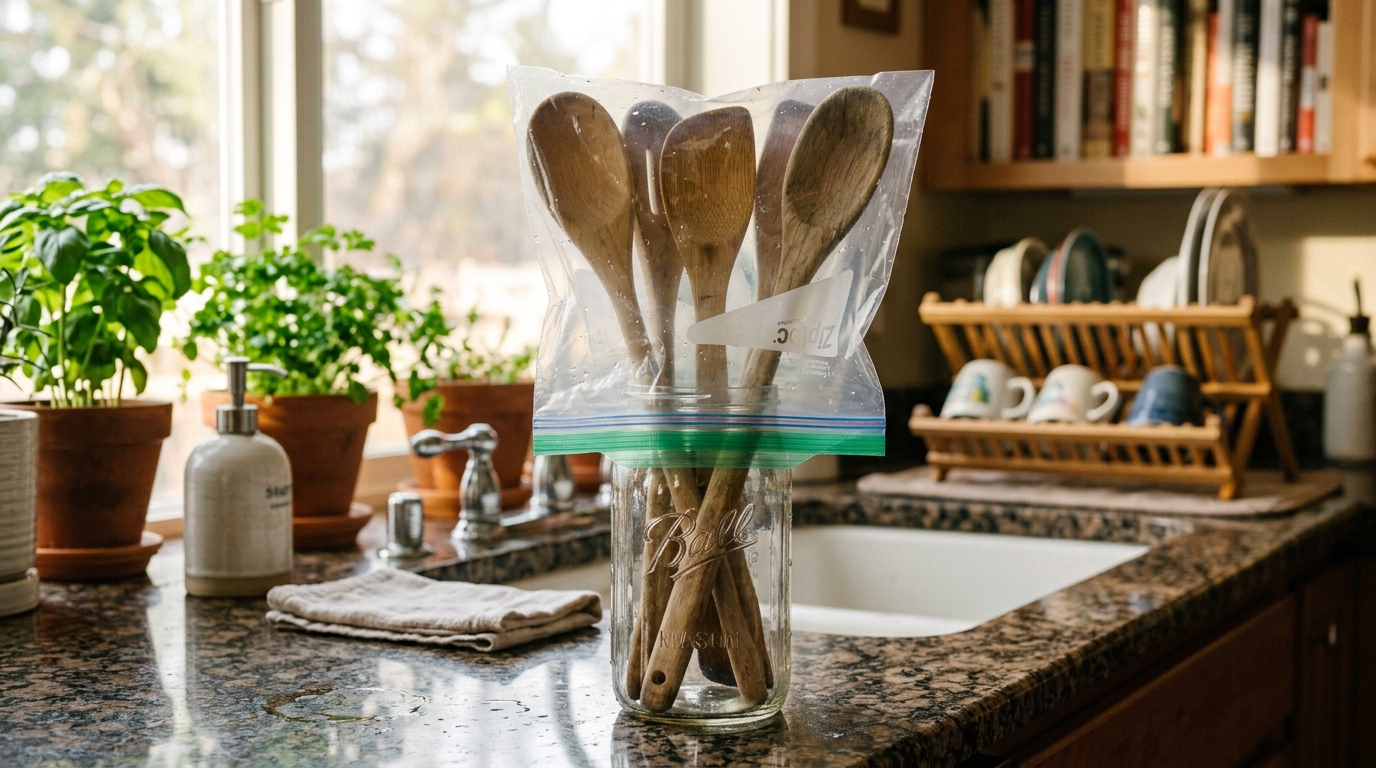
Drying is the step most people rush, and it actually matters the most. A damp bag folded up and shoved into a dark drawer is just asking for a mold problem. Airflow is your best friend here.
I keep a few upright wooden spoons in a heavy mason jar right by the sink. I just drape the washed bags upside down over the spoon handles so air easily circulates inside. Cabinet knobs work great too, or even the neck of an empty wine bottle. Anything that props the bag open works perfectly. Once they are bone dry, you can fold them up and store them away neatly.
When You Should Toss a Ziploc Bag Instead
Let’s be realistic: not every bag deserves a second life. Some need to go straight into the trash bin, with absolutely no negotiation. The biggest rule? Any bag that held raw meat, poultry, fish, eggs, or a severe food allergen goes directly in the garbage. Even after a vigorous washing, microscopic trace amounts of bacteria can linger and cross-contaminate your other food. Saving a nickel’s worth of plastic is never worth a bout of food poisoning.
The “Toss It” Checklist
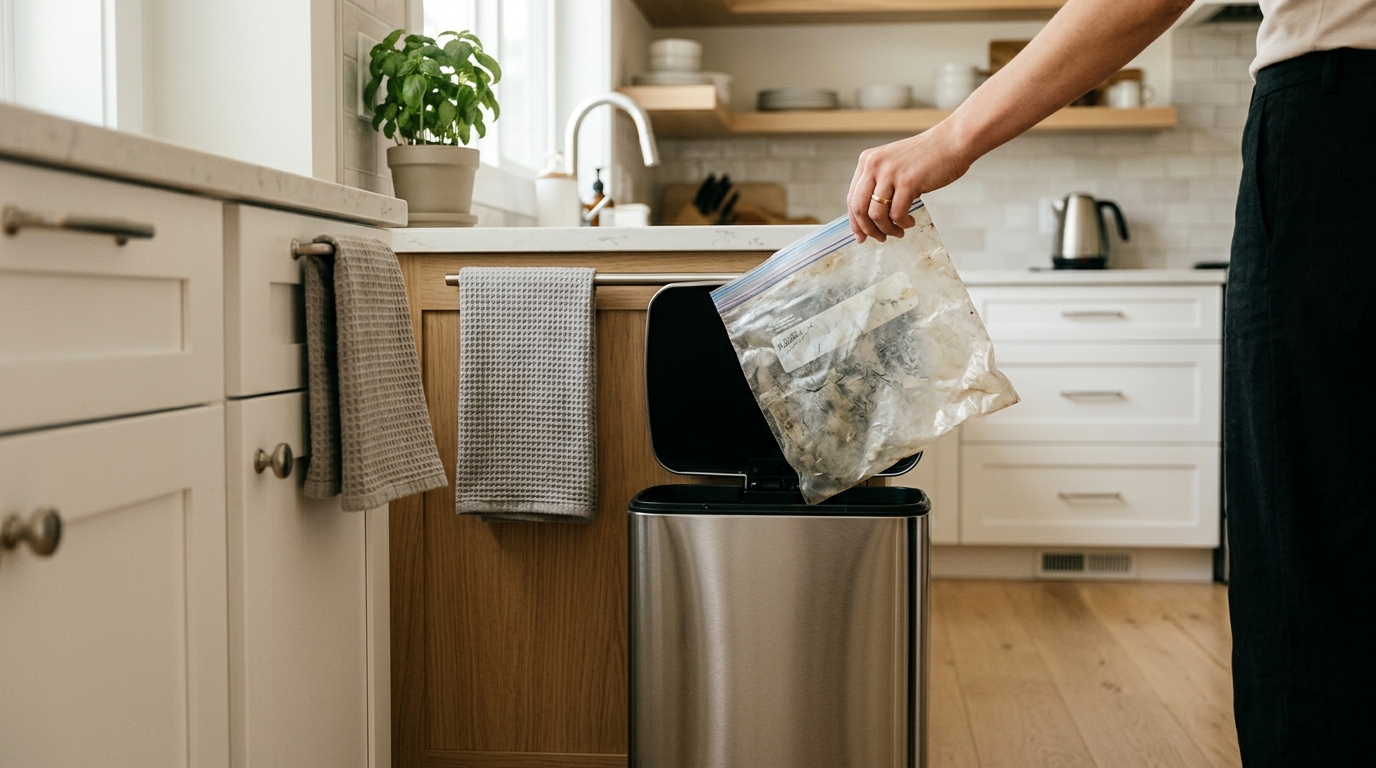
Here is my quick, non-negotiable list for when to throw a bag away:
- It held raw meat, poultry, fish, or raw eggs.
- It held a food allergen (like peanuts) and you want to reuse it for something else.
- The plastic is visibly cracked, cloudy, or tearing at the seams.
- The zipper track is warped and won’t seal securely anymore.
- It touched something greasy or sticky that you just couldn’t scrub off.
- It’s holding onto a stubborn odor (like my infamous onion bag!).
That last point is crucial. Plastic is porous. If you wash an onion-scented bag twice and it still smells like a Sunday farmers market, that smell is permanent. Let it go.
Are Reused Plastic Bags Actually Safe for Your Food?
This is the worry I hear most often from friends, and I totally get it. However, the practical reality is that proper washing and incredibly thorough drying keeps harmful bacteria from setting up shop. A clean, bone-dry bag stored properly in a drawer is not a science experiment waiting to happen. It’s just a bag.
The other concern people sometimes raise is about single-use plastic breaking down over time with repeated friction and use. I’ll keep this simple and non-alarmist: it’s a perfectly reasonable reason why some folks prefer a fresh bag for wet foods, and that’s a fine personal call to make.
My middle-ground habit keeps life easy. I happily reuse my bags for dry snacks, crackers, bread, and firm produce. I reach for a fresh, brand-new bag when raw proteins or messy marinades are involved. That simple split completely covers the actual safety risks without turning me into a person who throws a perfectly good piece of plastic into a landfill after a single use.
My whole system boils down to one golden rule: reuse the bags that held safe stuff, and retire the ones that held raw protein or won’t come clean. If you want proof that this becomes second nature, just look at my kitchen counter right now. There’s a happy little row of baggies drying upside down over wooden spoons, patiently waiting for round two.
Leave a Reply